
Nepal’s devastating flash floods have moved beyond the hills and rivers and straight onto the trading screen. The Nepal Stock Exchange, known as NEPSE, fell 35.92 points to close to 2550 in a single trading session after flash floods tore through the Rasuwa district, damaging hydropower plants, bank branches, customs points and commercial property along the way.
The floods have also caused serious loss of life and left many people missing across the border region, according to widely reported updates. This piece focuses specifically on what the disaster means for Nepal’s stock market, its hydropower companies and its insurance sector, which is where the financial damage is now being priced in.
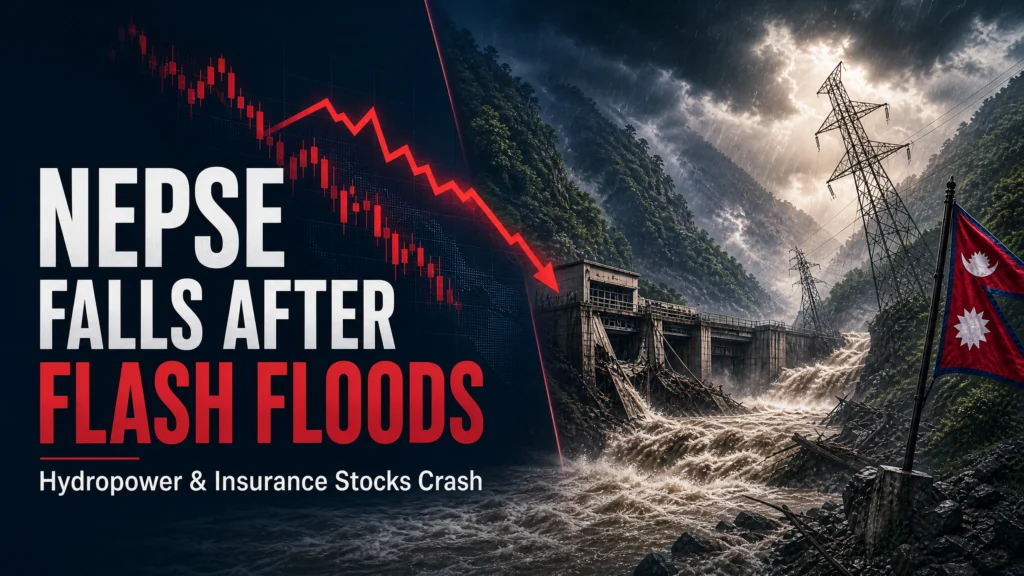
Quick Facts: Nepal Stock Market Flash Flood
| Detail | Info |
|---|---|
| Event | Flash floods in Rasuwa district, Nepal |
| Rivers Involved | Bhotekoshi and Trishuli |
| NEPSE Index Change | Down 35.92 points, to near 2550 |
| Hydropower Sub Index | Down 104 points, or 2.84% |
| Non Life Insurance Sub Index | Down 404 points, or 3.90% |
| Hydropower Projects Damaged | 13, per the Nepal Insurance Authority |
| Power Capacity Affected | 748 MW total (354 MW operating, 394 MW under construction) |
| Other Damage Reported | Bank branches, customs points, commercial property |
NEPSE Index Falls as Flash Flood Fear Grips the Market
According to a report by Moneycontrol Hindi, the flash floods that struck Nepal’s Rasuwa region sent a wave of uncertainty through the country’s stock market. As the Bhotekoshi and Trishuli rivers overflowed, several hydropower projects, bank branches, customs points and commercial properties suffered heavy damage.
That triggered fears among investors about the financial losses companies would absorb and the size of the insurance claims that would follow. The result was a broad selloff that pulled NEPSE, the exchange’s benchmark index, down by 35.92 points to close to the 2550 mark during the session.
Also Read >>>> Toxic Box Office Collection Day 1: Yash Beats Jawan, Trails KGF 2
Hydropower Stocks Take the Biggest Hit
Hydropower counters bore the brunt of the selling, since Rasuwa, the epicenter of the flooding, is home to a cluster of power projects. The hydropower sub index fell 104 points, or 2.84%, as investors priced in the risk of damaged generation assets and lost revenue.
Per the Nepal Insurance Authority, around 13 hydropower projects have been reported damaged. Of the affected capacity, 354 MW comes from projects that were already operating and generating power, while 394 MW comes from projects still under construction. Put together, that is 748 MW of power capacity now in question.
Which Hydropower Companies Are Affected
Several NEPSE listed hydropower companies were named among those hit by the floods: Upper Trishuli 1, Rasuwagadhi, Rasuwa Bhotekoshi, Upper Mailung A, Sanjen Khola, Langtang Khola and Chilime Hydropower. A number of these are publicly traded, which is why the damage reports translated so quickly into stock price pressure rather than staying a purely operational story.
Also Read >>>> Nepal-Tibet Flash Floods: Death Toll Rises, 384 Missing
Insurance Stocks Fall on Fear of Heavy Claims
The other major mover was the insurance sector. With flood damaged hydropower projects likely to file large claims, Nepal’s non life insurance sub index, also called the general insurance sub index, dropped 404 points, or 3.90%.
That decline lands on an already weak sector. Nepal’s general insurance companies were under profit pressure even before the floods. In fiscal year 2082/83 of the Vikram Samvat calendar, roughly the year running through mid 2026, nearly every insurer except Prabhu Insurance reported a fall in profit. A fresh wave of flood related claims could squeeze margins further just as the sector was trying to stabilize.
Can Reinsurance Cushion the Blow for Nepal’s Insurers
There is a buffer that could soften the impact. According to Nepal’s Insurance Authority, projects still under construction are typically covered by engineering insurance, under which around 80% of the risk is passed on to reinsurers rather than sitting with the original Nepali insurer.
Operating projects, meanwhile, are usually covered by property insurance, where the primary insurer keeps up to 50% of the risk and transfers the rest to reinsurance companies. Nepali rules also require that 30% of any domestic property reinsurance transfer stay with Nepal’s own domestic reinsurance companies, spreading at least part of the exposure locally rather than passing all of it abroad.
What Happens Next for Nepal Stock Market Investors
For now, the fall in NEPSE, hydropower stocks and insurance stocks is being driven by uncertainty and fear rather than confirmed loss figures. Until damaged companies report the actual extent of the damage and insurers publish accurate claim estimates, listed stocks tied to the flood are likely to stay volatile.
Going forward, news about restoration timelines for the damaged hydropower projects and updates on claim settlements from insurers will be the key triggers to watch in upcoming trading sessions.
Frequently Asked Questions (FAQs)
1. Why did Nepal’s stock market fall after the flash floods?
NEPSE fell because investors grew worried about the financial losses hydropower and insurance companies would face from flood damaged projects and the insurance claims likely to follow, triggering a broad selloff.
2. How much did the NEPSE index fall after the Nepal flash floods?
NEPSE, the Nepal Stock Exchange benchmark index, fell 35.92 points during the trading session, bringing it down to near the 2550 level.
3. Which hydropower stocks were hit hardest by the Nepal floods?
Reports named Upper Trishuli 1, Rasuwagadhi, Rasuwa Bhotekoshi, Upper Mailung A, Sanjen Khola, Langtang Khola and Chilime Hydropower among the companies affected. The hydropower sub index overall fell 2.84%.
4. How much did Nepal’s insurance stocks fall after the floods? The non life insurance sub index fell 404 points, or 3.90%, as investors priced in expectations of higher claims from flood damaged hydropower projects.
5. How many hydropower projects were damaged in the Nepal floods?
Around 13 hydropower projects were reported damaged, according to the Nepal Insurance Authority, with a combined 748 MW of capacity affected across operating and under construction projects.
6. Will reinsurance help Nepal’s insurance companies absorb the flood losses?
It should help to some extent. Engineering insurance on under construction projects transfers about 80% of the risk to reinsurers, while property insurance on operating projects can shift up to 50% of the risk off the primary insurer’s books.
7. What should investors watch next in the Nepal stock market?
The key triggers going forward are official damage assessments, confirmed insurance claim figures, and news on restoration timelines for the affected hydropower projects, all of which will determine whether the current volatility settles or continues.


Pingback: Stocks to Watch on Monday, August 31: 3 Stocks in Focus - Equity Munch